Atmospheric Science at the University of Northern British Columbia
Introduction
The University of Northern
British Columbia is a small, research-intensive university situated in Prince George, British Columbia, Canada.
British Columbia’s “Northern Capital”, Prince George is a city of 75,000 and a
regional transportation and economic hub. It is located close to the geographic
center of British Columbia – on the sparsely populated interior plateau between
the Coast and Rocky Mountains with excellent access to wilderness, mountains,
rivers, lakes and four-season outdoor activities. The city also offers many of
the amenities to be expected in much larger centers, including good airline
connections, professional theatre, symphony, as well as many other cultural and
sports events, and affordable housing. [Should we mention something
about the relatively lost cost of living?]
UNBC is one of Canada’s newest universities (the main campus opened in 1994) with an atmosphere that is intimate and collegial, facilities that are new and state-of-the-art, and architecture that is stunning. In a recent report (November 2004) evaluating research intensity in Canadian universities published in the National Post newspaper (one of Canada’s leading publications), UNBC ranked second amongst all small universities, narrowly missing out the top position in this category.
UNBC’s small size (there are 3000 students, of whom about 400 are graduate students) facilitates an interdisciplinary research environment in which researchers from many disciplines interact with each other. Atmospheric Science fits very well within the research milieu at UNBC, and is a cornerstone of one of UNBC’s three mandated research themes: Natural Resources and the Environment. The recent hiring of two Canada Research Chairs in the atmospheric sciences greatly enhances our research strength in this area.
Facilities
 Good
access to excellent facilities is available to researchers at UNBC. A $CDN 1.4M
High Performance Computing Center, established in 2000 by grants from the
Canada Foundation for Innovation and the BC Knowledge Development Fund has a
permanent staff member to provide user support (Dr. You Qin Wang) and includes
a 28 processor SGI Origin 3400 with 14 GB memory. A second CFI/BCKDF award in
2004 is resulting in a $CDN 2.1M expansion of the existing facility to include
a 32 processor SGI ALTIX server and a 64 processor SGI and a 128 processor Opteron cluster, as well as
powerful workstations in the HPC lab, and software for modeling and data
analysis. The UNBC GIS lab provides access to GIS software and consulting
services. A statistical consultant is available on campus for researchers. A
central equipment lab offers access to a suite of analytical equipment. UNBC
also has two research forests and the Quesnel
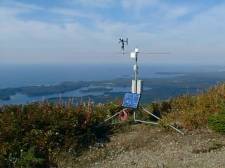
River Research Centre for hydrometeorological research. Meteorological
equipment includes the campus weather station (http://weather.unbc.ca/wx/), a 30 m
meteorological tower located on campus, a meso-network of 7 Campbell Scientific
based meteorological stations, a Scintec MFAS phased-array doppler sodar
system, a Radian doppler sodar system, and many other sensors and
meteorological instruments, including eddy covariance systems and bowen-ratio
systems for flux measurements.
Good
access to excellent facilities is available to researchers at UNBC. A $CDN 1.4M
High Performance Computing Center, established in 2000 by grants from the
Canada Foundation for Innovation and the BC Knowledge Development Fund has a
permanent staff member to provide user support (Dr. You Qin Wang) and includes
a 28 processor SGI Origin 3400 with 14 GB memory. A second CFI/BCKDF award in
2004 is resulting in a $CDN 2.1M expansion of the existing facility to include
a 32 processor SGI ALTIX server and a 64 processor SGI and a 128 processor Opteron cluster, as well as
powerful workstations in the HPC lab, and software for modeling and data
analysis. The UNBC GIS lab provides access to GIS software and consulting
services. A statistical consultant is available on campus for researchers. A
central equipment lab offers access to a suite of analytical equipment. UNBC
also has two research forests and the Quesnel
River Research Centre for hydrometeorological research. Meteorological
equipment includes the campus weather station (http://weather.unbc.ca/wx/), a 30 m
meteorological tower located on campus, a meso-network of 7 Campbell Scientific
based meteorological stations, a Scintec MFAS phased-array doppler sodar
system, a Radian doppler sodar system, and many other sensors and
meteorological instruments, including eddy covariance systems and bowen-ratio
systems for flux measurements.
Graduate Programs
Graduate students in the atmospheric sciences at both the Ph.D. and M.Sc. level are in Environmental Science as part of the Natural Resources and Environmental Studies graduate program (http://www.unbc.ca/nres/). In this program, in addition to specialized training and courses relevant to the atmospheric sciences (see below), students will interact with their peers in other disciplines such as biology, forestry, geography and other branches of the environmental sciences. This cross-fertilization encourages students to acquire disciplinary expertise in an interdisciplinary context.
Postdoctoral positions are also available to work on specific research projects with faculty members.
Graduate Courses
A suite of courses are available as part of the NRES graduate program. The following subset of courses is especially relevant to the atmospheric sciences and these courses are offered on a regular basis.
ENSC 608-3 Storms ENSC
625-3 Global Change Science
ENSC 612-3 Air Pollution NRES 710-3 Modeling and Simulation
NRES 798-3 Geophysical
Data Analysis NRES 798-3 Hydrometeorology
Atmospheric Science Faculty
Dr. Stephen Déry, Assistant Professor and Canada Research Chair in Northern Hydrometeorology
Environmental Science & Engineering Program
Email: sdery@unbc.ca, Web: http://web.unbc.ca/~sdery, Phone: (250) 960-6533
Research Interests Summary:
1) Arctic climate variability and change with a focus on river discharge in northern Canada. Analysis of all hydrometric data available for northern rivers of Canada will be conducted to assess the impact of climate change on the hydrologic cycle of these basins. Atmospheric and land surface drivers for these changes will be explored to determine predictability "hot spots".
2) Meteorological towers will be deployed in Quesnel River Basin (QRB) where UNBC operates the Quesnel River Research Centre (QRRC) to measure its environment (air temperature, precipitation, and snow distribution). A mesoscale atmospheric model will be coupled to a land surface model to assess the role of snowcover, glaciers, and other land surface parameters on the QRB's hydrologic cycle.
3) Tracking the evolution of the snowpack using radar measurements. Snowfall rates inferred from the Baldy Hughes weather radar (located near Prince George) will be compared to snowfall measurements taken at QRRC. Snow depth and mass will be tracked from radar observations and a simple snow ablation model to assess the spatial distribution and temporal variation of snow in QRB.
Other Potential Research Projects:
1) Development and validation of a coupled snow and blowing snow model.
2) Analysis of remote sensing images of snow in QRB.
3) The role of snowcover on Arctic permafrost.
4) Global climatology and trends in adverse winter weather events.
5) The Arctic Ocean snow mass budget.
Opportunities for Graduate Students:
Scholarships or assistantships for positions at the Master's and/or doctoral level will be available in Dr. Déry’s group for qualified students beginning in September 2005. Students will have the opportunity to do fieldwork at QRRC and in northern Canada, including during International Polar Year in 2007-2009.
Selected Publications:
Déry, S.J., Stieglitz, M., McKenna, E.C., and Wood, E.F., 2005: Characteristics and trends in river discharge into Hudson, James, and Ungava Bays, 1964-2000. Journal of Climate, 18, 1540-1557.
Déry, S.J., Stieglitz, M., Rennermalm, Å.K., and Wood, E.F., 2005: The water budget of the Kuparuk River Basin, Alaska. Journal of Hydrometeorology, in press.
Déry, S.J., and Wood, E.F., 2004: Teleconnection between the Arctic Oscillation and Hudson Bay river discharge. Geophysical Research Letters, 31, L18205.
Stieglitz, M., Déry, S.J., Romanovsky, V.E., and Osterkamp, T.E., 2003: The role of snow cover in the warming of Arctic permafrost. Geophysical Research Letters, 30, 1721.
Déry, S.J., and Yau, M.K., 2001: Simulation of an Arctic ground blizzard using a coupled blowing snow-atmosphere model. Journal of Hydrometeorology, 2, 579-598.
Dr. Peter Jackson, Associate Professor
Environmental Science & Engineering Program
Email: peterj@unbc.ca, Web: http://cirrus.unbc.ca/peterj, Phone: (250) 960-5985.
Research Interests
Summary:
I am a mesoscale meteorologist whose research mostly
concerns windflow in complex terrain (i.e. in mountains and along coastlines)
and environmental applications such as dispersion of atmospheric pollutants and
forest insects (i.e. Mountain Pine Beetles) in those regions. In pursuing this
theme my research group and I use both surface and Doppler Sodar observations,
analytical models, and numerical models such as RAMS and MC2. These
models are run in the UNBC High Performance Computing Facility.
Projects:
There are a number of new and ongoing projects that are loosely linked by the theme of windflow in complex terrain:
1) High resolution atmospheric numerical simulation for a multi-year period in hindcast mode over western Canada. This is an ongoing project. The results of the simulations will be a database of meteorological fields to be used for environmental applications such as atmospheric transport and dispersion studies, assessing wind power potential, and marine hazards.
2) Air pollution studies. Members of my research group are involved in a variety of air quality studies ranging from advanced dispersion modeling studies using mesoscale and lagrangian models, to source apportionment for fine particulate matter to personal exposure monitoring, to use of Doppler sodar to relate vertical wind profiles to pollutant episodes.
3) Atmospheric modeling of mountain pine beetle transport. Mountain Pine Beetles are devastating the pine forests of western Canada. This project seeks to use RAMS to simulate the atmosphere during times of peak MPB flight and develop trajectories to assess long-range transport by the wind.
4) Observation and modeling of glacier and icefield mass balance processes.
5) Gap wind flow through valleys and fjords through both observation and numerical modeling.
Opportunities for
Graduate Students:
I have funding for well-qualified Ph.D. or M.Sc. students in air pollution meteorological monitoring and dispersion studies, as well as grants pending for glacier and multi-year numerical atmospheric simulation studies. Funding can usually be found for good applicants in any of the project areas listed above, either through grants, scholarships or other awards.
Selected
Publications:
Jackson, P.L., 2004: Chapter 11: Atmospheric impacts of urbanization. The Fraser River delta and its urban estuary. edited by B. Groulx, J. L. Luternauer and D. E. Bilderback, Bulletin 567, Geological Survey of Canada, Ottawa, p. 316.
Reason, C.J.C. and P.L. Jackson, 2002: Modelling a southeast Australian coastal ridging event. Meteor. Applications, 9, 383–397.
Tory, K., P. L. Jackson and C. J. C. Reason, 2001: Sensitivity of CTD dynamics to barrier height and topographic variability in a numerical model. Mon. Wea. Rev., 129, 2955–2969.
Reason, C. J. C., K. Tory and P. L. Jackson, 2001: A model investigation of the dynamics of a Coastally Trapped Disturbance. J. Atmos. Sci., 58(14), 1892–1906.
Tory, K.J., C.J.C. Reason, and P. L. Jackson, 2001: A numerical study of a southeast Australian coastal ridging event. Mon. Wea. Rev., 129(3), 437-452.
Dr. Youmin Tang, Associate Professor and Canada Research Chair in Climate Prediction and Predictability
Environmental Science & Engineering Program
Email: ytang@unbc.ca, Web: http://web.unbc.ca/~ytang, Phone: (250) 960-5190
Research Interests
Summary:
1)
ENSO and ENSO-reduced seasonal climate predictability studies.
A common method for determining
prediction reliability is ensemble prediction. How to construct optimal
ensemble predictions for climate models (ENSO) and how to optimally measure the
uncertainty of predictions have been Dr. Tang’s one of main researches in
recent years. A newly developed theoretical framework of climate predictability
will be further refined and applied to seasonal climate prediction and ENSO
prediction of long-term over 150 years is under the way.
2)
Coupled
Ocean/Atmosphere Modeling, Analysis and Prediction. While to better simulate
and predict ENSO with data assimilation still remains one of Dr.Tang’s research
interests, he is currently particularly interested in the development of
coupled models for predicting tropical Atlantic SST. The intensive research will take place into what governs climate
predictability in this important region. Significant attention will focus on
the interaction between the Pacific and Atlantic coupled ocean/atmosphere
systems.
3) Ocean data assimilation. To improve model prediction skill, Dr. Tang has been interested in developing novel data assimilation schemes. Specific emphasis will be placed on the assimilation of surface data, i.e., altimetry and sea surface temperature observations due to the unavailability of subsurface data in many regions.
Projects:
1) A systematic and extensive investigation of ENSO predictability.
2) The development of skillful predictions of tropical Atlantic SST.
3) The development of a 4-D assimilation system with ensemble Kalman filter for ocean prediction.
Opportunities for
Graduate students:
Three to four graduate opportunity in climate dynamics at the Master and doctoral level is currently available in Dr. Tang’s group for qualified students. The scholarships or research assistantships are also available for qualified applicants.
Selected
Publications:
Tang, Y., Kleeman, R., and Moore,
A., 2005: On the reliability of ENSO dynamical predictions. J. Atmos. Sci., 62, 1770-1791.
Tang, Y., Kleeman, R., and Moore, A., 2004: A simple method for estimating variations in the predictability of ENSO. Geophy. Res. Letters, 31(17), L17205 10.1029/2004GL020673.
Tang, Y., Kleeman, R., and Moore, A., 2004: SST assimilation experiments in a tropical Pacific Ocean model, J Phys. Oceangr. 34(3), 623-642.
Tang, Y and Hsieh, W. W, 2001: Coupling neural networks to incomplete dynamical systems via variational data assimilation , Mon. Wea. Rev., 129, 818-834.
Tang, Y.,
Kleeman, R., Moore, A., Weaver, A., and Vialard, J., 2003: The use of ocean
reanalysis products to initialize ENSO predictions. Geophys. Res. Lett.,
30(13), 1694, 10.1029/2003GL017664.
Affiliated Faculty and Staff
 Dr.
Art Fredeen, Associate Professor of Forestry. Carbon Fluxes from forests.
Dr.
Art Fredeen, Associate Professor of Forestry. Carbon Fluxes from forests.
Dr. Scott Green, Assistant Professor of Forestry. Climate change impacts on forests.
Dr. Margot Mandy, Associate Professor of Chemistry. Atmospheric and interstellar chemistry.
Dr. Brian Menounos, Assistant Professor of Geography. Paleo-climates.
Dr. Patrick Montgomery, Associate Professor of Mathematics. Modeling gravity currents and flows in the environment and lab.
Mr. Brendan Murphy, Research Associate in Atmospheric Science. Atmospheric modeling and synoptic climatology.
Dr. Eric Rapaport, Assistant Professor of Environmental Planning. Climate change and urban systems.
Dr. Heather Smith, Associate Professor of International Studies. Climate change policy.
Dr. You Qin (Jean) Wang, High Performance Computing Senior Lab Instructor. Computational Fluid Dynamics and Scientific Visualization.
Dr. Roger Wheate, Associate Professor of Geography. Climate change impact on glaciers.
Dr. Ken Wilkening, Assistant Professor of International Studies. Trans-pacific pollutant transport.
 Contact
Information
Contact
Information
Environmental Science & Engineering Program
University of Northern British Columbia
3333 University Way
Prince George, BC
CANADA, V2N 4Z9
Program Secretary: (250) 960-6250
Current weather conditions on campus: http://weather.unbc.ca/wx/